
Compares Oracle Cloud's and Google Cloud's free tiers as hosts for self-hosting n8n, recommends a setup method for each, and walks through creating a free e2-micro VM on Google Cloud.
A three-way walkthrough of AWS, Oracle Cloud and Google Cloud free tiers for running an always-on VPS. It demos an AWS EC2 setup and shows the creator's own Oracle Arm instance, then covers Google Cloud more briefly.
Grounded AI Lab · YouTube · published Oct 10, 2026 · Cloud platforms
 ▶ Watch on YouTube
All three require a credit or debit card plus ID, so set billing alerts to avoid surprise charges.
Keep your AI agent online 24/7 -- VPS from $21.99/year
SponsorWant your product here? Sponsor a slot
A three-way walkthrough of AWS, Oracle Cloud and Google Cloud free tiers for running an always-on VPS. It demos an AWS EC2 setup and shows the creator's own Oracle Arm instance, then covers Google Cloud more briefly.
Changed since filming: The creator says Oracle gives 4 OCPU / 24 GB of Arm free. Oracle's current Always Free docs give 1,500 OCPU-hours and 9,000 GB-hours a month, which is about 2 OCPU / 12 GB. The video also calls Google's free offer credit-only, but Google's Free Tier separately includes one e2-micro VM a month with no expiry (in us-west1, us-central1 or us-east1).
If your priority is running VMs for free or pushing lots of bandwidth cheaply, OCI wins clearly: its Always Free tier includes 2 Arm OCPUs/12 GB RAM, 200 GB block storage and 10 TB/month of outbound data, and egress beyond that is $0.0085/GB from NA/EU. Pick Google Cloud if you want serverless (Cloud Run), the most polished managed Kubernetes, BigQuery, or first-party Gemini models, and accept that internet egress is billed at roughly $0.08-$0.12/GiB on the default tier.
| Factor | Oracle Cloud (OCI) | Google Cloud |
|---|---|---|
| Always-free VM | Arm A1 Flex: 2 OCPUs + 12 GB RAM total, plus up to 2 AMD E2.1.Micro VMs | 1 e2-micro VM (2 vCPU shared, 1 GB) in us-west1, us-central1 or us-east1 |
| Signup credit | US$300, valid 30 days | $300, valid 90 days |
| Free outbound data | 10 TB/month | 1 GB/month from North America (Compute Engine free tier); 200 GiB/month on Standard Tier |
| Egress after free allowance | $0.0085/GB (NA, EU, UK origin) | $0.12/GiB first TiB, $0.11 up to 10 TiB (Premium Tier, to NA/EU); Standard Tier from $0.085/GiB |
| Free block storage | 200 GB (boot + block combined) | 30 GB-months standard persistent disk |
| Managed Kubernetes control plane | OKE Basic cluster free; Enhanced cluster $0.10/hr | GKE $0.10/cluster/hr, one zonal or Autopilot cluster free via $74.40 monthly credit |
| Serverless containers/functions | OCI Functions: 2M invocations + 400,000 GB-s free/month | Cloud Run: 2M requests, 180,000 vCPU-s, 360,000 GiB-s free/month |
| Commercial regions | 41 commercial regions in 26 countries (50+ public regions incl. sovereign/government) | 43 regions, 130 zones |
| First-party AI models | Hosts third-party models (Cohere, Meta Llama, xAI Grok, Google Gemini, OpenAI gpt-oss) | Google Gemini models plus 200+ models in Model Garden |
Compares Oracle Cloud's and Google Cloud's free tiers as hosts for self-hosting n8n, recommends a setup method for each, and walks through creating a free e2-micro VM on Google Cloud.

For static sites and commercial side projects on a $0 budget, Cloudflare is the safer pick: static asset requests are free and unlimited, and the free plan carries no non-commercial clause in the docs we read. Choose Vercel if you build Next.js apps and want long-running Node functions, preview tooling and team features, but budget for Pro ($20/mo per developer seat), because Hobby is limited to personal or non-commercial use. New Cloudflare projects should start on Workers with static assets rather than Pages, since Cloudflare's docs point Pages users to a migration guide and Workers has the broader feature set.
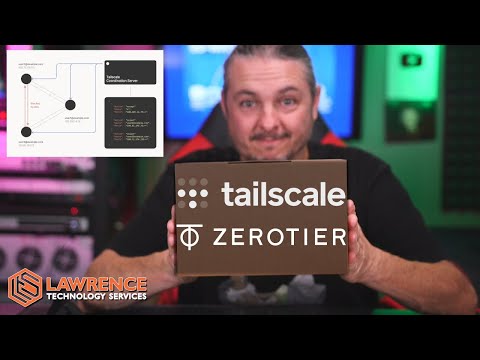
For most developers and small teams, Tailscale is the easier default: its free Personal plan allows 6 users with unlimited user devices, and an open-source (BSD-3) self-hosted control server, Headscale, exists. Pick ZeroTier when you need virtual Layer 2 (Ethernet) networking, or when your team has many users but few devices, since ZeroTier bills per device ($18/mo covers 10) while Tailscale bills per user ($8/user/mo).

For most developers Porkbun is the better long-term home: its listed renewals are lower on all four TLDs checked (.com $11.81 vs $19.98) and its JSON API, sandbox and scoped keys are available to any account. Namecheap wins only on some first-year promos (e.g. .dev at $7.48) and offers 24/7 support, but its API is gated behind 20 domains or $50 in balance/spend and uses XML.

Pick Hetzner if you run self-managed servers in Europe and care about cost per vCPU/GB and bandwidth: EU plans include 20 TB of traffic and dedicated-vCPU servers start at €36.99/mo versus $63/mo for a comparable DigitalOcean General Purpose Droplet. Pick DigitalOcean if you need managed PostgreSQL/MySQL, managed Kubernetes, more regions (16 datacenters) or a $4/mo entry server. Outside the EU, Hetzner's price and traffic advantage shrinks sharply.
Summary written by AIHOW.DEV from the video's transcript; the creator's views are their own. Current prices come from vendor pages, see sources.