
A three-way walkthrough of AWS, Oracle Cloud and Google Cloud free tiers for running an always-on VPS. It demos an AWS EC2 setup and shows the creator's own Oracle Arm instance, then covers Google Cloud more briefly.
Compares Oracle Cloud's and Google Cloud's free tiers as hosts for self-hosting n8n, recommends a setup method for each, and walks through creating a free e2-micro VM on Google Cloud.
Abhay Kulkarni · YouTube · published Jun 1, 2025 · Cloud platforms
 ▶ Watch on YouTube
Google's browser-based SSH button makes connecting easier than Oracle's key-download flow.
Keep your AI agent online 24/7 -- VPS from $21.99/year
SponsorWant your product here? Sponsor a slot
Compares Oracle Cloud's and Google Cloud's free tiers as hosts for self-hosting n8n, recommends a setup method for each, and walks through creating a free e2-micro VM on Google Cloud.
Changed since filming: The video says Oracle's Arm instance offers up to 24 GB RAM and 4 cores. Oracle's current Always Free allowance is about 2 OCPU / 12 GB (1,500 OCPU-hours and 9,000 GB-hours a month), and Oracle may reclaim Always Free VMs that sit idle for 7 days.
If your priority is running VMs for free or pushing lots of bandwidth cheaply, OCI wins clearly: its Always Free tier includes 2 Arm OCPUs/12 GB RAM, 200 GB block storage and 10 TB/month of outbound data, and egress beyond that is $0.0085/GB from NA/EU. Pick Google Cloud if you want serverless (Cloud Run), the most polished managed Kubernetes, BigQuery, or first-party Gemini models, and accept that internet egress is billed at roughly $0.08-$0.12/GiB on the default tier.
| Factor | Oracle Cloud (OCI) | Google Cloud |
|---|---|---|
| Always-free VM | Arm A1 Flex: 2 OCPUs + 12 GB RAM total, plus up to 2 AMD E2.1.Micro VMs | 1 e2-micro VM (2 vCPU shared, 1 GB) in us-west1, us-central1 or us-east1 |
| Signup credit | US$300, valid 30 days | $300, valid 90 days |
| Free outbound data | 10 TB/month | 1 GB/month from North America (Compute Engine free tier); 200 GiB/month on Standard Tier |
| Egress after free allowance | $0.0085/GB (NA, EU, UK origin) | $0.12/GiB first TiB, $0.11 up to 10 TiB (Premium Tier, to NA/EU); Standard Tier from $0.085/GiB |
| Free block storage | 200 GB (boot + block combined) | 30 GB-months standard persistent disk |
| Managed Kubernetes control plane | OKE Basic cluster free; Enhanced cluster $0.10/hr | GKE $0.10/cluster/hr, one zonal or Autopilot cluster free via $74.40 monthly credit |
| Serverless containers/functions | OCI Functions: 2M invocations + 400,000 GB-s free/month | Cloud Run: 2M requests, 180,000 vCPU-s, 360,000 GiB-s free/month |
| Commercial regions | 41 commercial regions in 26 countries (50+ public regions incl. sovereign/government) | 43 regions, 130 zones |
| First-party AI models | Hosts third-party models (Cohere, Meta Llama, xAI Grok, Google Gemini, OpenAI gpt-oss) | Google Gemini models plus 200+ models in Model Garden |
A three-way walkthrough of AWS, Oracle Cloud and Google Cloud free tiers for running an always-on VPS. It demos an AWS EC2 setup and shows the creator's own Oracle Arm instance, then covers Google Cloud more briefly.

For static sites and commercial side projects on a $0 budget, Cloudflare is the safer pick: static asset requests are free and unlimited, and the free plan carries no non-commercial clause in the docs we read. Choose Vercel if you build Next.js apps and want long-running Node functions, preview tooling and team features, but budget for Pro ($20/mo per developer seat), because Hobby is limited to personal or non-commercial use. New Cloudflare projects should start on Workers with static assets rather than Pages, since Cloudflare's docs point Pages users to a migration guide and Workers has the broader feature set.
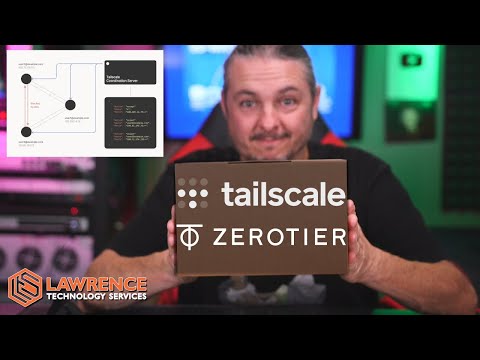
For most developers and small teams, Tailscale is the easier default: its free Personal plan allows 6 users with unlimited user devices, and an open-source (BSD-3) self-hosted control server, Headscale, exists. Pick ZeroTier when you need virtual Layer 2 (Ethernet) networking, or when your team has many users but few devices, since ZeroTier bills per device ($18/mo covers 10) while Tailscale bills per user ($8/user/mo).

For most developers Porkbun is the better long-term home: its listed renewals are lower on all four TLDs checked (.com $11.81 vs $19.98) and its JSON API, sandbox and scoped keys are available to any account. Namecheap wins only on some first-year promos (e.g. .dev at $7.48) and offers 24/7 support, but its API is gated behind 20 domains or $50 in balance/spend and uses XML.

Pick Hetzner if you run self-managed servers in Europe and care about cost per vCPU/GB and bandwidth: EU plans include 20 TB of traffic and dedicated-vCPU servers start at €36.99/mo versus $63/mo for a comparable DigitalOcean General Purpose Droplet. Pick DigitalOcean if you need managed PostgreSQL/MySQL, managed Kubernetes, more regions (16 datacenters) or a $4/mo entry server. Outside the EU, Hetzner's price and traffic advantage shrinks sharply.
Summary written by AIHOW.DEV from the video's transcript; the creator's views are their own. Current prices come from vendor pages, see sources.